
In the world of team building, there are many people who can lead a group, but few who are truly effective at transforming one. An effective facilitator is more than a social director; they are a Decision-Maker who consistently chooses Reason over Ego.
To be a transformation specialist, you must master both the Art and the Science of facilitation.
The Art and Science of the Wise Facilitator
The Art: Leading by Example through Self-Regulation
The “Art” of facilitation is your ability to embody the Right-Minded Teamwork® Aspiration: Do No Harm & Work as One ®. This requires constant self-regulation—the ability to monitor your internal state and choose “Right-Minded” attitudes.
When you demonstrate emotionally mature behavior, you aren’t just leading a meeting; you are teaching the team how to behave through your example.
- The Ego Trap: If you display arrogance or defensive behavior, you trigger an “Ego-Attack” within the group, creating teammate resistance and sabotaging the effort.
The Science: Methodical Excellence and a Well-Planned Team Process
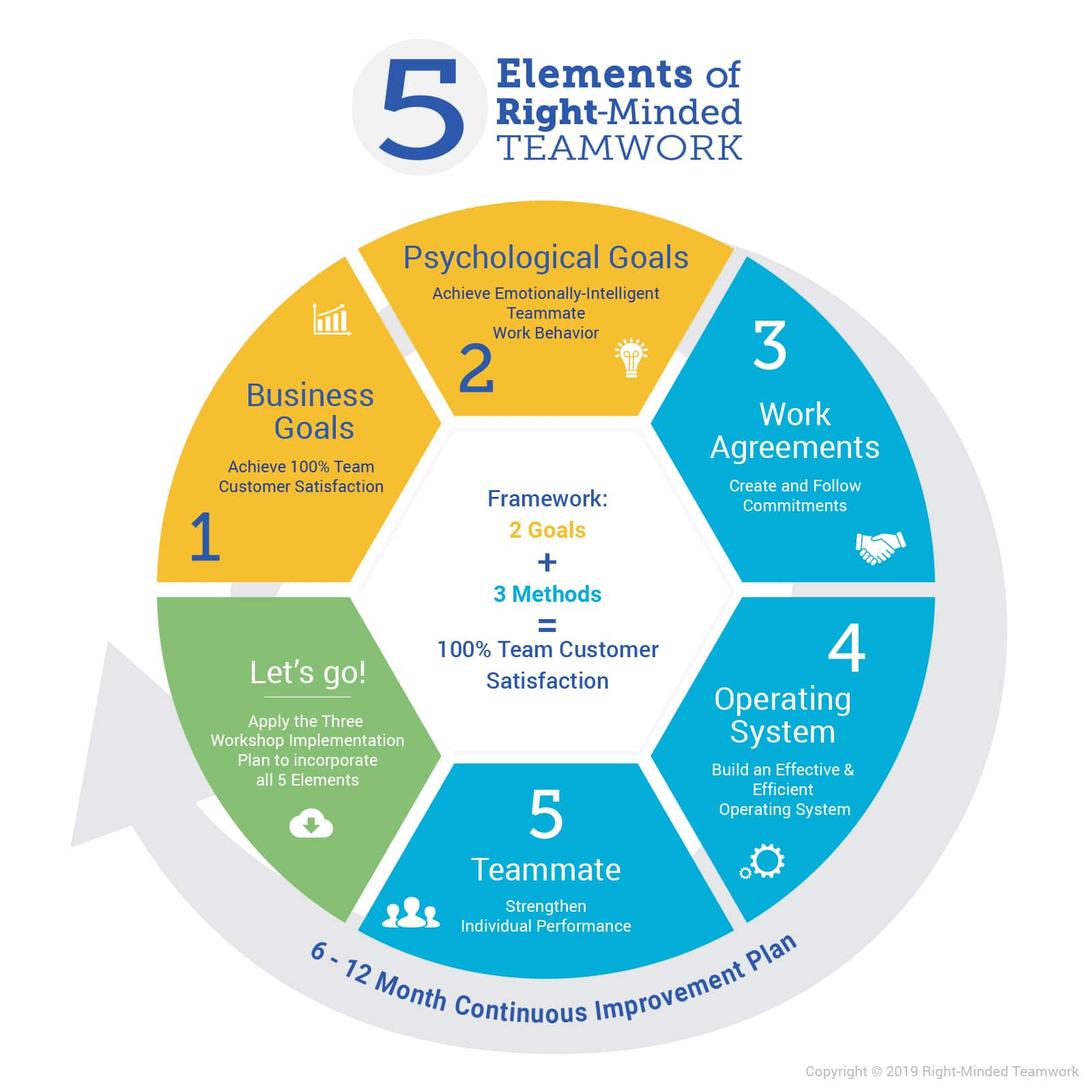
The “Science” is your knowledge of strategic teamwork methods. It is the ability to apply a continuous improvement process, such as the RMT 5-Element Framework, to produce tangible business results.
Real-World Team Building vs. The “Silly Games” Myth
Team building is often misunderstood as mere socializing, playing a team game, or attending a training session in hopes that people will change. To be a master facilitator, you must guide teams away from the “Team Building Myth” and toward Real-World Team Building.
- The Worst: Irrational, embarrassing exercises that lack a business purpose. These “silly games” are the root cause of teammate cynicism.
- Social Events: Bowling or happy hours are great for camaraderie, but they are not legitimate “team building.”
- The Best: A customized workshop where teammates resolve real challenges and create practical Team Work Agreements. In this space, the facilitator and teammates are jointly accountable for success.
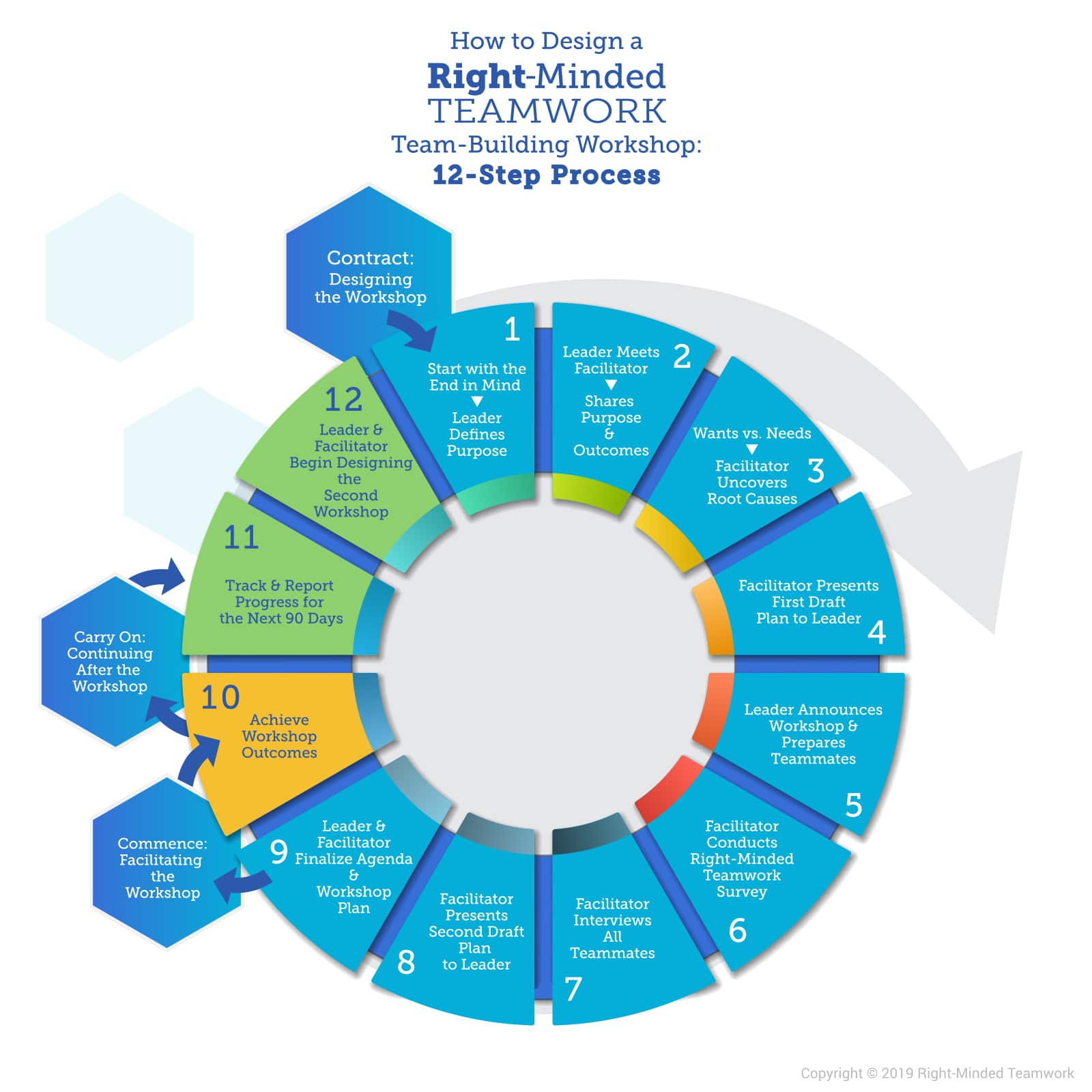
RMT’s 12-Step Workshop Design Process
To ensure a transformational experience, follow this 12-step roadmap—a well-planned team process used for 40 years to achieve high-performance teamwork.
Phase 1: Contract (Designing the Workshop)
- Determine Purpose: Identify what specifically the leader thinks needs to change.
- Connect: Agree to follow the fit-for-purpose structured 12-step RMT process.
- Uncover Root Causes: Leader and facilitator look past symptoms to find the true team need.
- Draft the Plan: Create the first draft agenda and outcomes.
- Prepare Teammates: The leader announces the workshop.
- Survey: Use a Right-Minded survey to identify potential outcomes.
- Interview: Facilitator conducts 1-on-1 interviews with all teammates; creates the Punch List of the team’s true needs along with potential process solutions.
- Refine: Present a 2nd draft plan based on teammate input.
- Finalize: Leader and facilitator agree on the final agenda and present it to teammates along with their preparation instructions.
Phase 2: Commence (Facilitating)
10. Execute: Conduct the workshop and agree on progress tracking.
Phase 3: Carry On (Maintaining Momentum)
11. Track: Monitor progress for the next 90 days. 12. Evolve: Begin the cycle again for the next level of growth.
Your Next Steps
To truly master this 12-step process, I invite you to explore the Master Facilitator’s Workshop Design eBook Package. It includes the comprehensive training course, customizable Word templates, and the ebook, only available here: Design a Right-Minded Team-Building Workshop.
As a retired facilitator, I am here to support your journey. If you are ready to move your team away from Ego-driven games and toward a Reason-led future, let’s begin.

May the Oneness be with you. 🙏
Dan Hogan, Certified Master Facilitator
PS. I used this process for 40 years, and it worked every time!
