
RMT Element #2: Training the “Right Mind” to See Through the Ego’s Lies.
The poet William Blake once wrote:
This life’s dim windows of the soul / Distorts the heavens from pole to pole / And leads you to believe a lie / When you see with, not through, the eye.

In the heat of a difficult team situation, it is easy to see with the eye. You see a teammate who is “lazy,” a boss who is “controlling,” or a constantly complaining teammate who feels like an obstacle to your success.
But the Right Choice Model teaches us that this is a distortion. When you see with the eye, you are following the Ego. You are believing the lie that the conflict is only outside of you. To find conflict resolution strategies that actually work, you must learn to see through the eye using Reason’s guidance, which advocates finding solutions instead of fault.
Element #2: The Psychological Goal
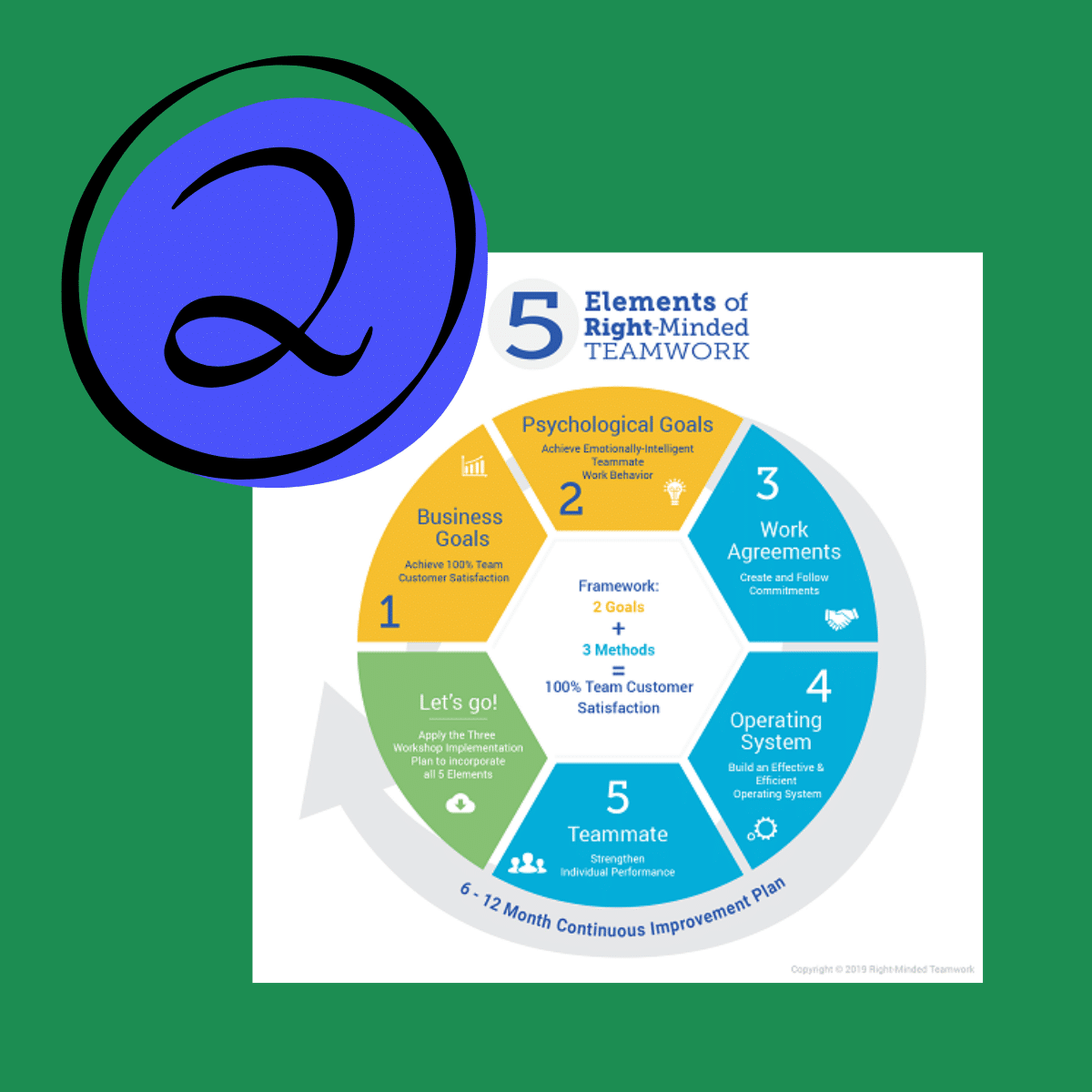
While Element #1 defines your team’s destination (Customer Satisfaction), Element #2 is the team’s agreed-upon intention of how you will behave on the journey. It is the foundation of psychological safety at work.
Element #2 is your collective commitment; it is your “Right-Minded” thought system. In this system, you acknowledge a simple truth: Your thoughts precede and cause your behavior. If you want to change how teammates act, you must first encourage them to change how they think. To do that, you can use the Right Choice Model.
The Decision-Maker’s Choice
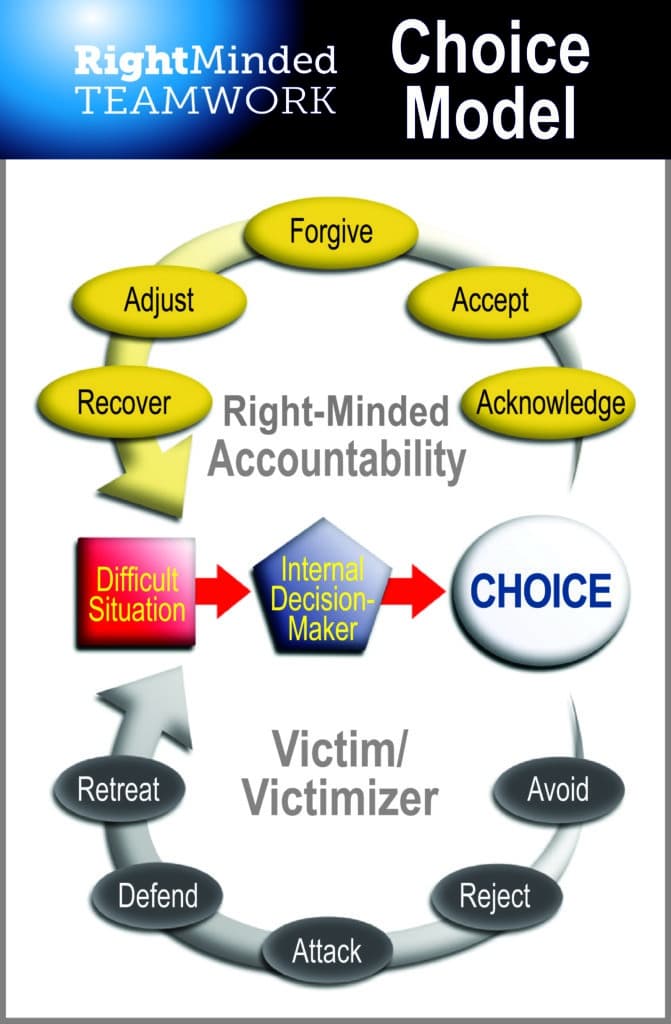
Every teammate is a Decision-Maker. In every difficult situation, you have only two choices:
- The Lower Loop (Ego): Rejection, attack, and defensiveness. This is “seeing with the eye.” This leads to dysfunctional team building and a divided culture.
- The Upper Loop (Reason): Accepting, Forgiving, and Adjusting. This is “seeing through the eye.” This recognizes that an “attack” is often a call for help. This is the path to high-performance teamwork.
Your Call to Action: Establish Your Team’s Psychological Goal
Don’t wait for a crisis to decide how you will behave. To ensure psychological safety in the workplace, you must establish your team’s psychological goal now.
The Exercise:
In your next meeting, discuss and agree on a sentence similar to this one:
“As a team, we choose to follow Reason. When difficult team situations happen, we will not follow the Ego’s blame and punishment advice. Instead, we will follow Reason’s compassionate guidance to Do No Harm and Work as One.”
Go Deeper:
Defining these attitudes is the starting line, but living them requires a structured approach. To learn more ways your team can create a fit-for-purpose psychological goal and explore the full list of 30 Right-Minded Attitudes, pick up your copy of Right-Minded Teamwork in Any Team.

May Oneness be with you. 🙏
Dan Hogan, Certified Master Facilitator
P.S. New here? You can learn more about my 40-year mission to help teams Do No Harm and Work as One® on my About Page.
