
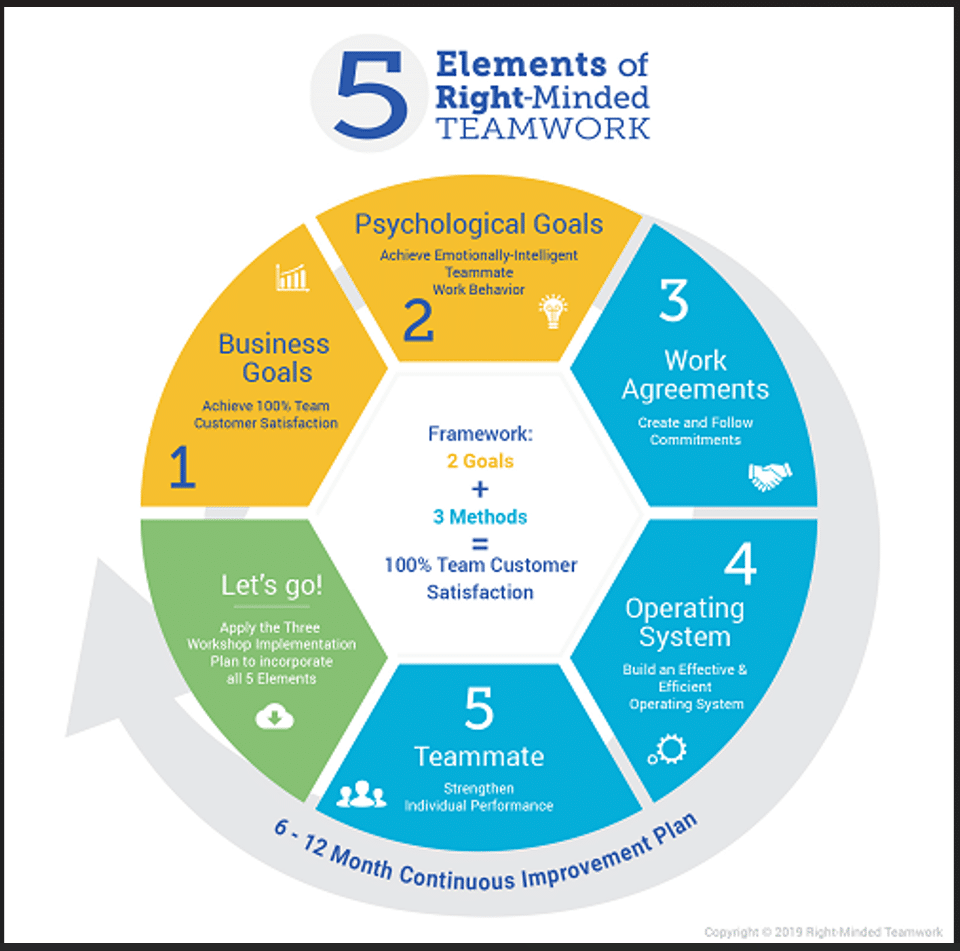
In Right-Minded Teamwork, we say that Work Agreements (Element #3) are the tools that transform difficult situations into collaborative solutions.
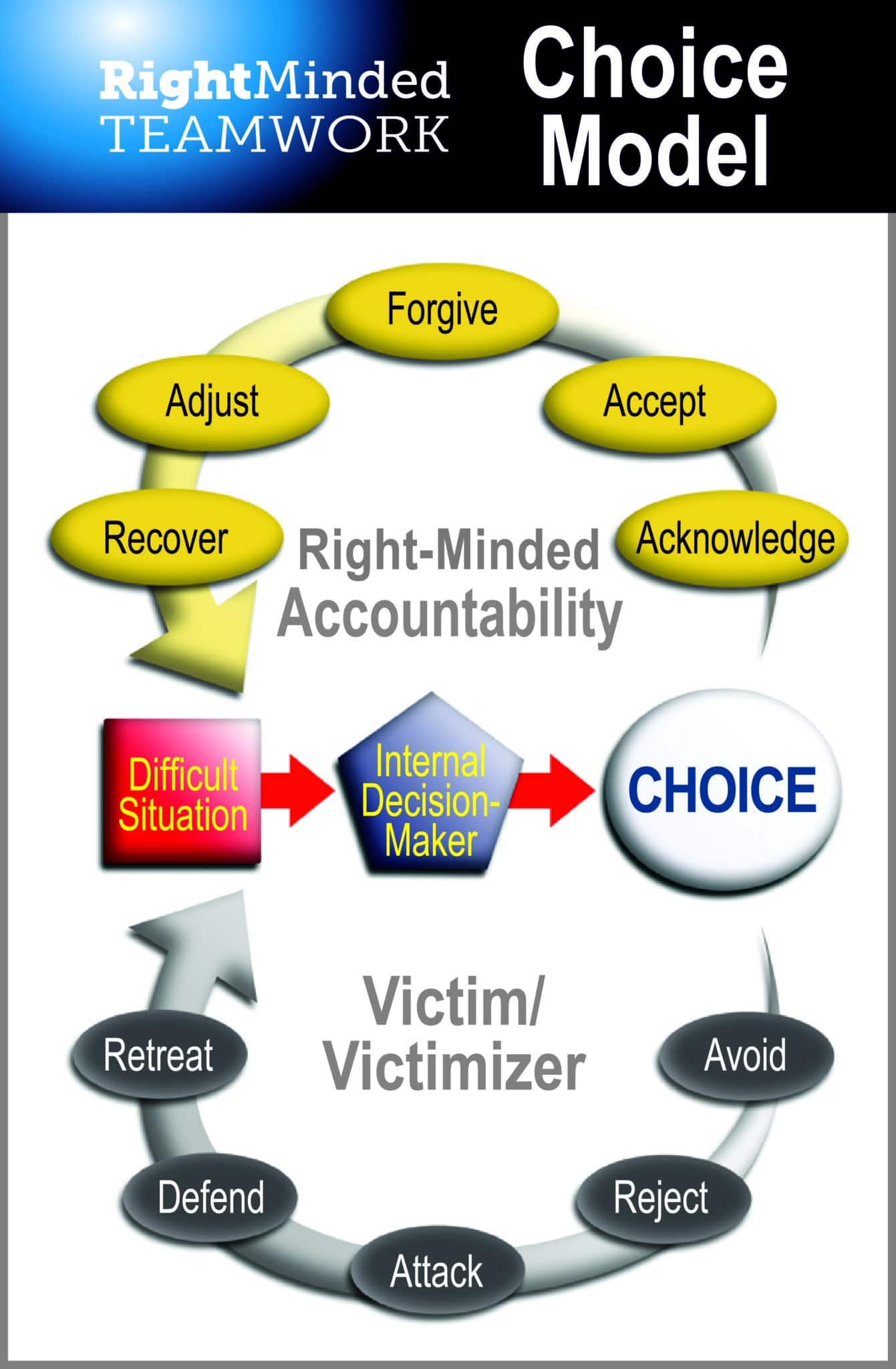
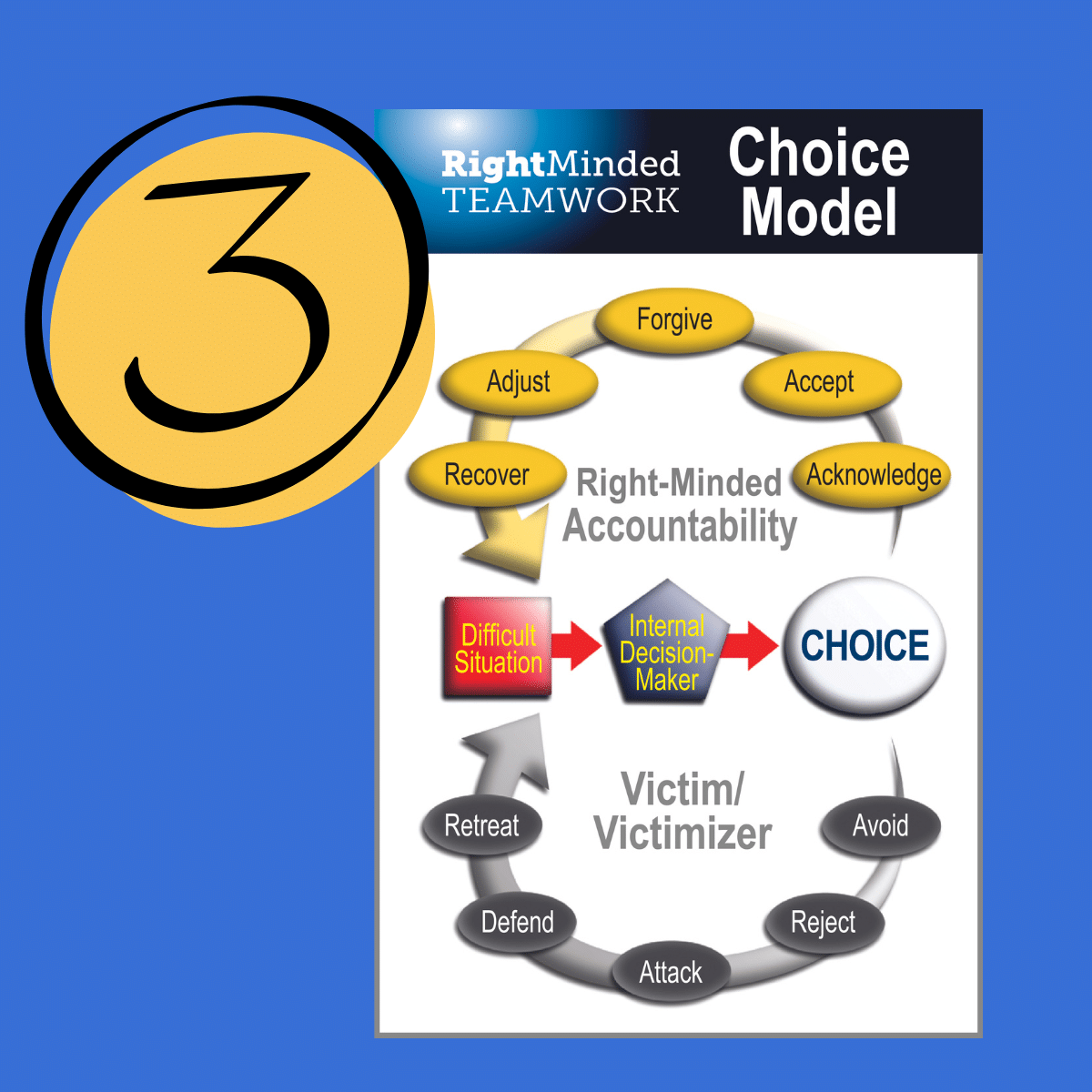
According to the Right Choice Model, that transformation begins at a universal crossroads: The Difficult Situation [see red box in model →].
Whether it’s a missed deadline, a budget error, or a personality clash, a difficult situation is an invitation to discuss and resolve a team problem.
But here is the truth:
Only teams who desire to stay in the Upper Loop can create and successfully live Work Agreements.
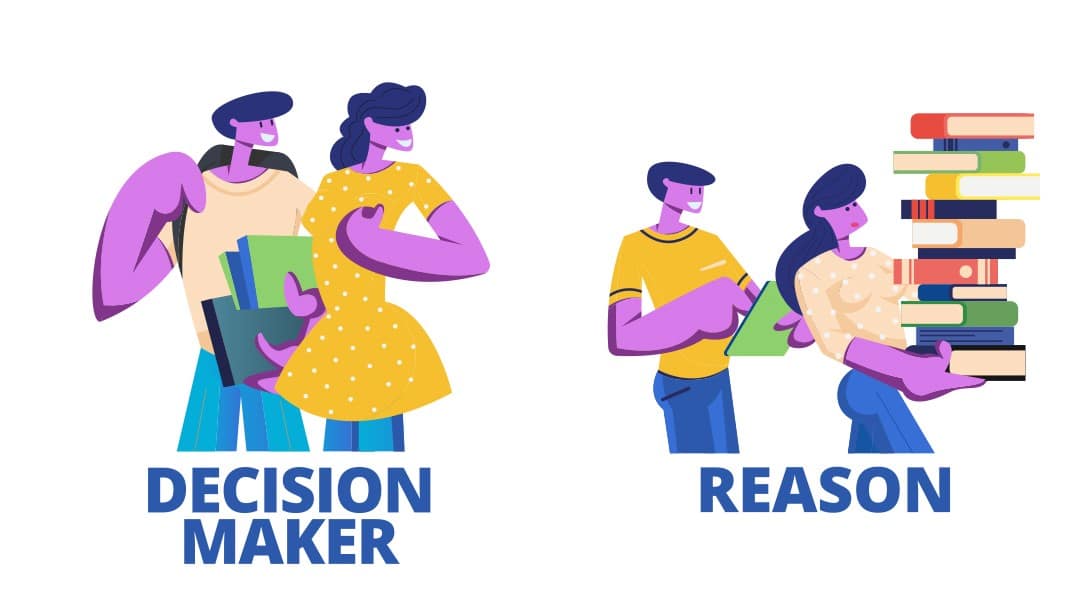
They know beyond a shadow of a doubt that they only have these two choices.
- They either follow the Ego into a “Lower Loop” of defensiveness, or
- They choose Reason and ascend to the accountable “Upper Loop.”
The AP Crisis: Compassion over Confrontation
In the RMT Element #1 of this series, I shared the story of an Accounts Payable (AP) team facing a service failure. Some vendors weren’t being paid, and tension was high. In that “Defining Moment,” two teammates were prepared to disrupt the solution-finding process:
- The Bully (seeking power through attack).
- The Martyr (seeking safety through victimization).
If an “out of their right mind” leader were leading this team, they might have ignored them or even harshly shut them down. But this Right-Minded Leader acted as a Mindful Ally. They compassionately prevented a disruption by helping them see that the Upper Loop was actually in their best interest.
The Bully realized that blaming others wouldn’t actually fix the vendor issue. The Martyr realized that by engaging in creating a solution, they would finally get the “system fix” they had been begging for.
The Transformation Step: “Create, Promote, or Allow”
When the leader briefly presented the model at the beginning of the meeting, they also asked their teammates to answer the RMT’s accountability question:
“How did we—as an interdependent team—create, promote, or allow this situation to happen?”
Since everyone was in the right frame of mind, the team’s collective Decision-Maker shifted toward the Upper Loop. The Team was able to:
- Acknowledge the problem without the sting of judgment.
- Accept that they were collectively responsible for the solution, even though the mistakes were made by only a few teammates.
- Forgive: That collective acceptance helped them return to their “Right Mind,” which helped transform the difficult situation.
“Let Agreements Replace Difficult Situations”
The “transformation” happens when a team decides that they don’t want to live in the “Storming” phase anymore. They let their Work Agreement replace their difficult situation.
The Choice is Yours
When your team hits a “Difficult Situation,” look at the Model. You don’t want to go into Ego’s Battleground of “Separateness.” You want to compassionately lead your teammates into Reason’s Classroom, where all teammates Do No Harm and Work as One.
Remember: “It is as sure that those who find fault in how the team is operating will find cynicism, as it is certain that those who choose to find solutions through Work Agreements will find satisfaction.”
Ready to apply the Right Choice Model to your team’s challenge?
Curious about the 10 Steps? Read this short Team-Building How-To’s post: Facilitating Team Work Agreements
OR
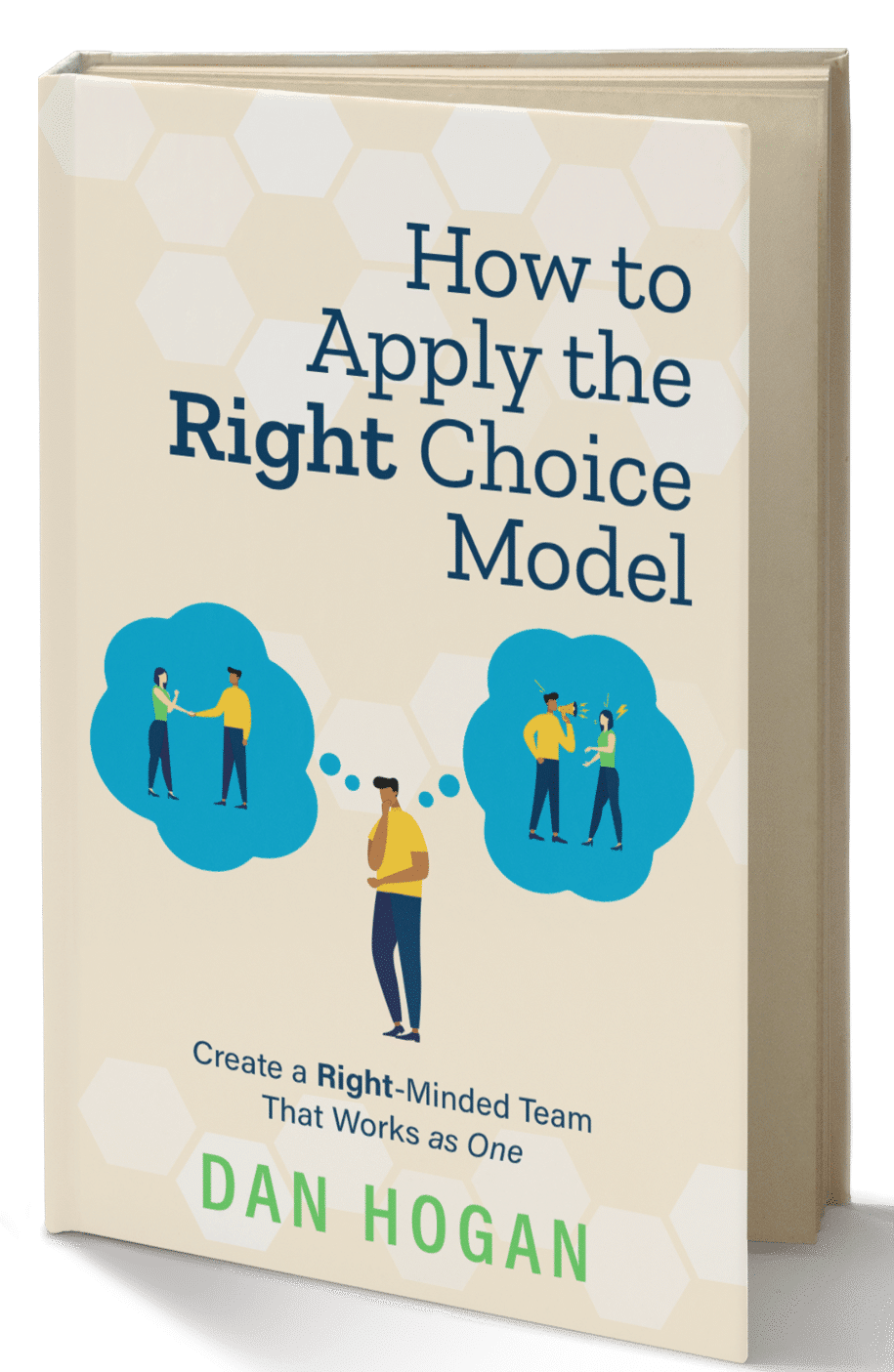
Get the step-by-step eBook Facilitation Package: How to Apply the Right Choice Model: Create a Right-Minded Team That Works as One.
As a retired facilitator, my function is now to support you. If you are curious about how to lead this dialogue, please reach out. I have seen this shift transform many teams, and it can work for yours, too.

May the Oneness be with you. 🙏
Dan Hogan, Certified Master Facilitator