
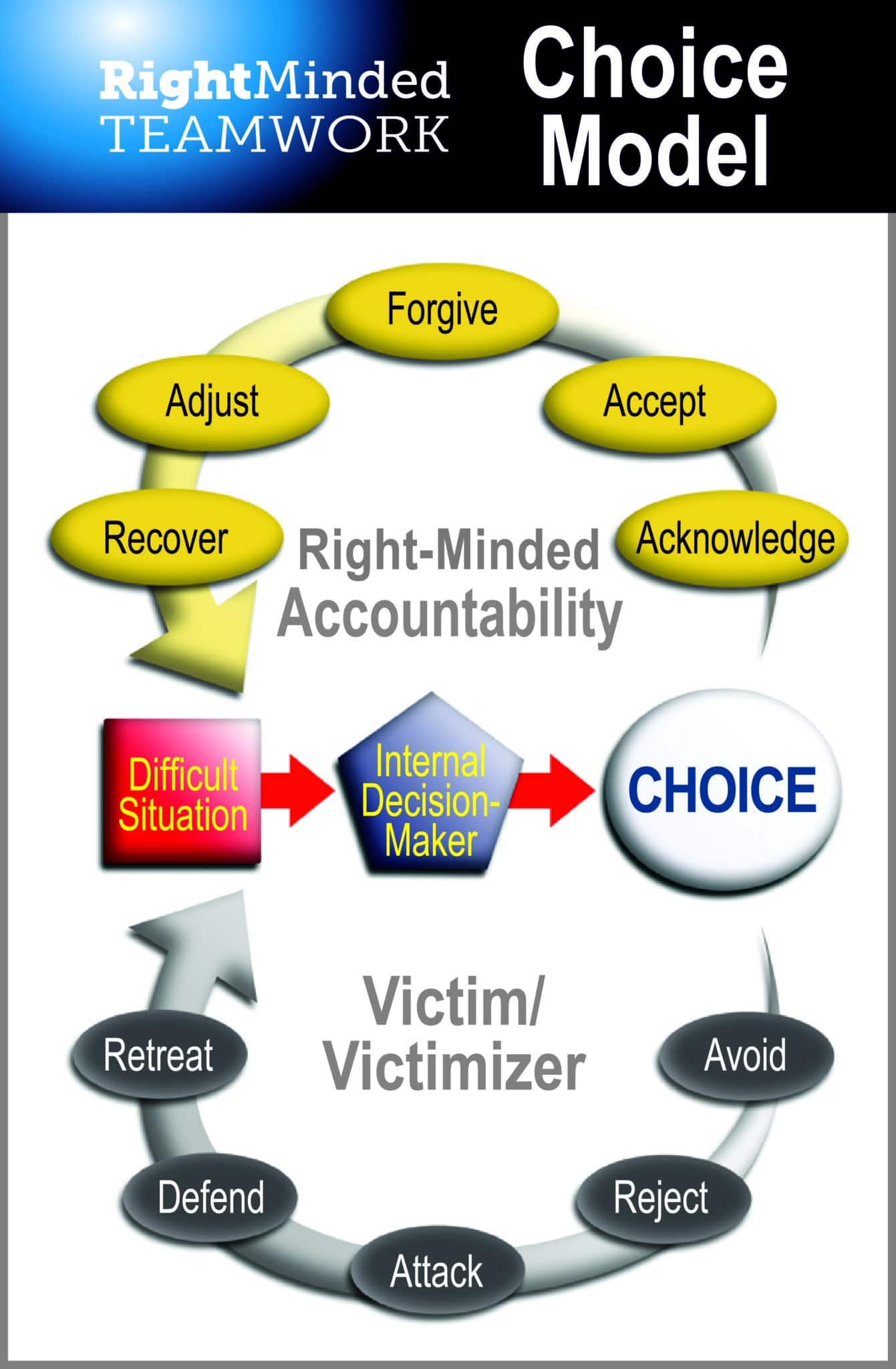
In this post, Strengthening Performance: The Power of the Right-Minded Teammate, we presented the power of the Right Choice Model, showing how a leader successfully applied it to facilitate a team meeting to resolve a team-wide customer mistake.
Implied in that story, you will find the model’s true power. That power lies in how you behave and self-regulate during difficult team situations.
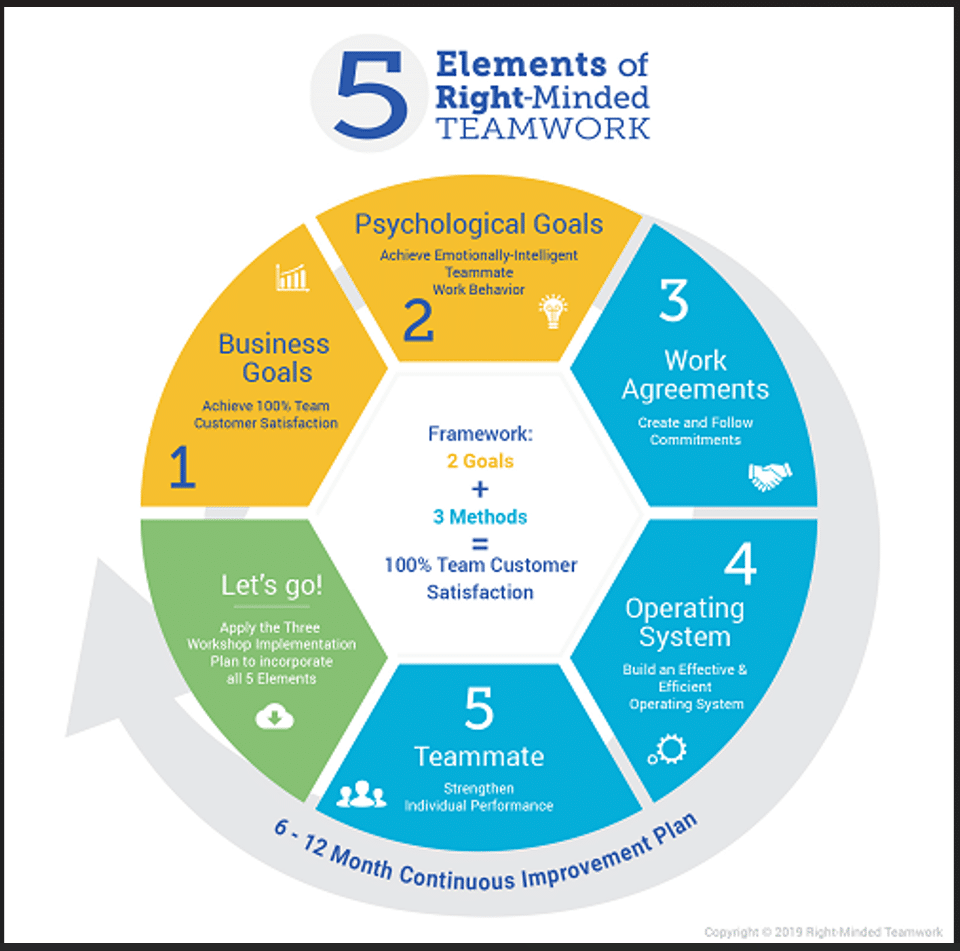
In Right-Minded Teamwork®, we say that Element #5: Right-Minded Teammate Development is the time for you and your teammates to strengthen your true power. Here’s an overview of how to do it.
The Power of Personal Accountability
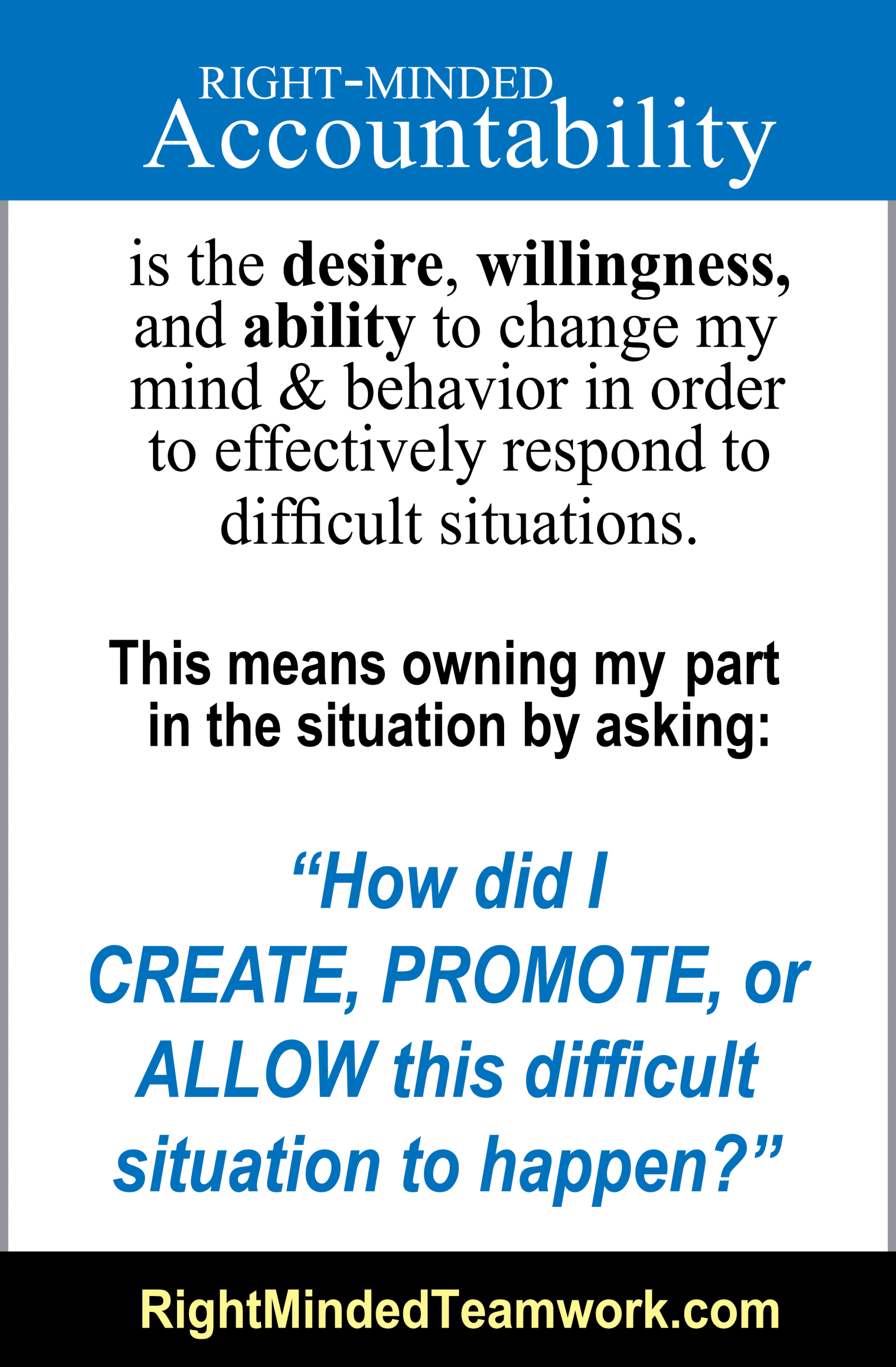
In Right-Minded Teamwork (RMT), we define accountability as the desire, willingness, and ability to change my mind and behavior to effectively respond to difficult situations.
It starts with one transformative question: “How did I create, promote, or allow this difficult situation to happen?”
By asking this, you immediately pivot away from the Lower Loop (the Ego’s trap) and toward the Upper Loop (Reason’s classroom). Let’s look at how this works through the lens of a teammate we’ll call the “Unengaged Ally.” In this scenario, the unengaged ally sees another teammate who they believe is not pulling their weight and is performing poorly. It is a situation that affects everyone, yet this unengaged ally has fallen into an ego-attack way of thinking it“isn’t my problem.”
If the Ally Remains Unengaged
When the Unengaged Ally chooses the “Lower Loop path,” [most of the time it is an unconscious choice], they follow the Ego into an attitude of avoidance and fault-finding.
Here is their typical behavior.
- Avoid: They try to ignore the teammate’s poor performance, hoping the leader will see it and “deal with them.” They think that by staying silent, the situation might go away.
- Reject: As the irritation grows with their teammate, they tell themselves it isn’t that big of a deal. They decide they can still do their job by working around that teammate.
- Attack: But eventually, the teammate’s work hurts their performance. Frustration peaks. They say mean-spirited “ego attack” things to the poorly performing teammate and complain about the leader’s lack of action.
- Defend: But when another teammate asks why they didn’t bring this up sooner, they defend themselves: “I’m not their supervisor! I have too much work to do as it is. This is NOT my problem.”
- Retreat: Finally, they hide. They stop returning emails, claim they are “too busy” with other issues to help, or simply walk away and close their office door.
When the Ally Is Engaged
Now, let’s look at that same person who chose to follow the Right Choice Model as an Engaged Ally. Instead of letting the situation rule them, they self-regulated using their Decision-Maker to follow the path of Reason:
- Acknowledge & Accept: Instead of avoiding, they acknowledge the problem. They ask the critical question: “How have I created, promoted, or allowed this situation to occur?” They might realize they promoted it by not being honest about how the poor performance was impacting their own work.
- Forgive: They move into an attitude of forgiveness, believing that mistakes are to be corrected, not punished. They let go of the past irritation so they can focus on a future solution.
- Adjust & Recover: They choose to have a private, factual, and neutral conversation with the teammate. They set a positive stage, describing the situation without judgment, and state what they need to work effectively.
By taking these steps, the Engaged Ally doesn’t “fix” a person; they create a new Work Agreement that helps not only the two of them work better together, but often the agreements help the entire team recover and move forward.
Note: this poor-performing teammate example is presented in more detail in the How to Apply the Right Choice Model book.
The Choice is Yours
Accountability isn’t something that is done to you; it is a choice you make for yourself.
When you choose the Upper Loop, you aren’t just “doing your job”—you are becoming a Right-Minded Teammate, one who is dedicated to Do No Harm and Work as One®.
Ready to strengthen your true power?
Get the step-by-step eBook Package: How to Apply the Right Choice Model: Create a Right-Minded Team That Works as One.
As a retired facilitator, my function is now to support you. If you have questions, please reach out.

May the Oneness be with you. 🙏
Dan Hogan, Certified Master Facilitator