
RMT Element #1: The Real Purpose of Team Building
When leaders look for team-building exercises or fun group activities, they are usually trying to fix a morale problem. They want their people to “get along.” But after 40 years of facilitating over 500 teams, I’ve seen the truth: You can’t “bond” your way to high-performance teamwork if your team is failing to satisfy its customers.
Too many traditional team-building efforts don’t start with the end in mind: 100% Customer Satisfaction.
While personality tests and social outings can add marginal business value, they are far more impactful when teammates are already achieving their mission. If a team is failing to meet expectations, it doesn’t matter much if a teammate is an introvert or an extrovert. To achieve psychological safety at work, you must first achieve results.
Misconception: Who is Team-Building For?
There is a common misconception that team building is solely for the benefit of the teammates. While a healthy, supportive culture is a vital goal, it is secondary to the reason the team exists in the first place. In Right-Minded Teamwork® (RMT), the team’s business goal comes first.
Team-Building is primarily for the Team’s Customer.
Think of a professional sports team. When an interdependent team is losing games, they don’t solve the problem by going out for a nice dinner or reviewing personality profiles. They go to the practice field. They work on the fundamentals of their game.
That is what RMT promotes: a “practice field” where teammates use practical tools like Work Agreements to achieve real-world results.
High-Performance is a Byproduct
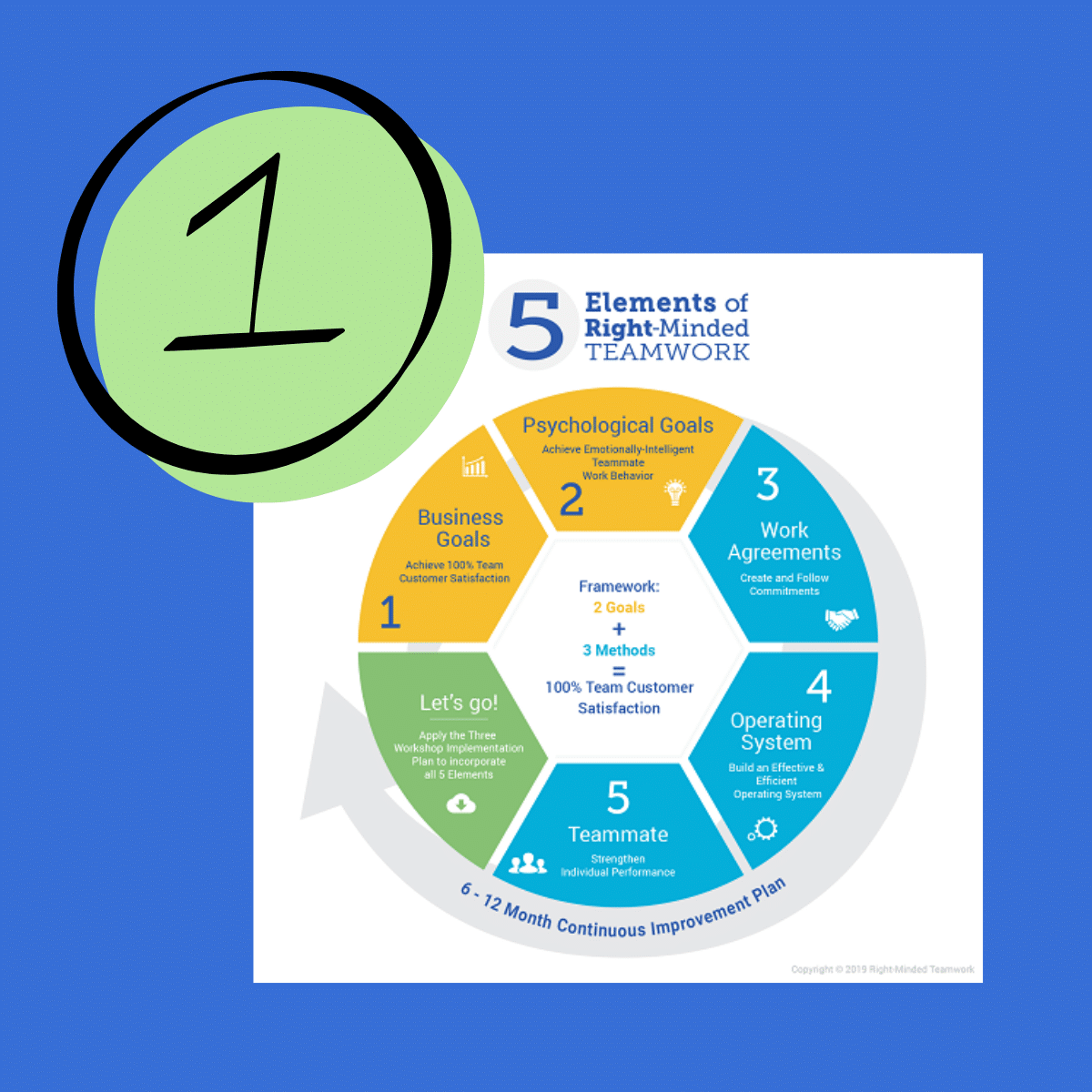
The primary reason for your team’s existence is to meet or exceed your customers’ expectations. High-performance teamwork is the byproduct of a team focused on achieving 100% customer satisfaction. When you align around the customer, teammate “bonding”—like improved trust and respect—happens naturally as a result of shared success.
RMT Element #1: The Business Goal
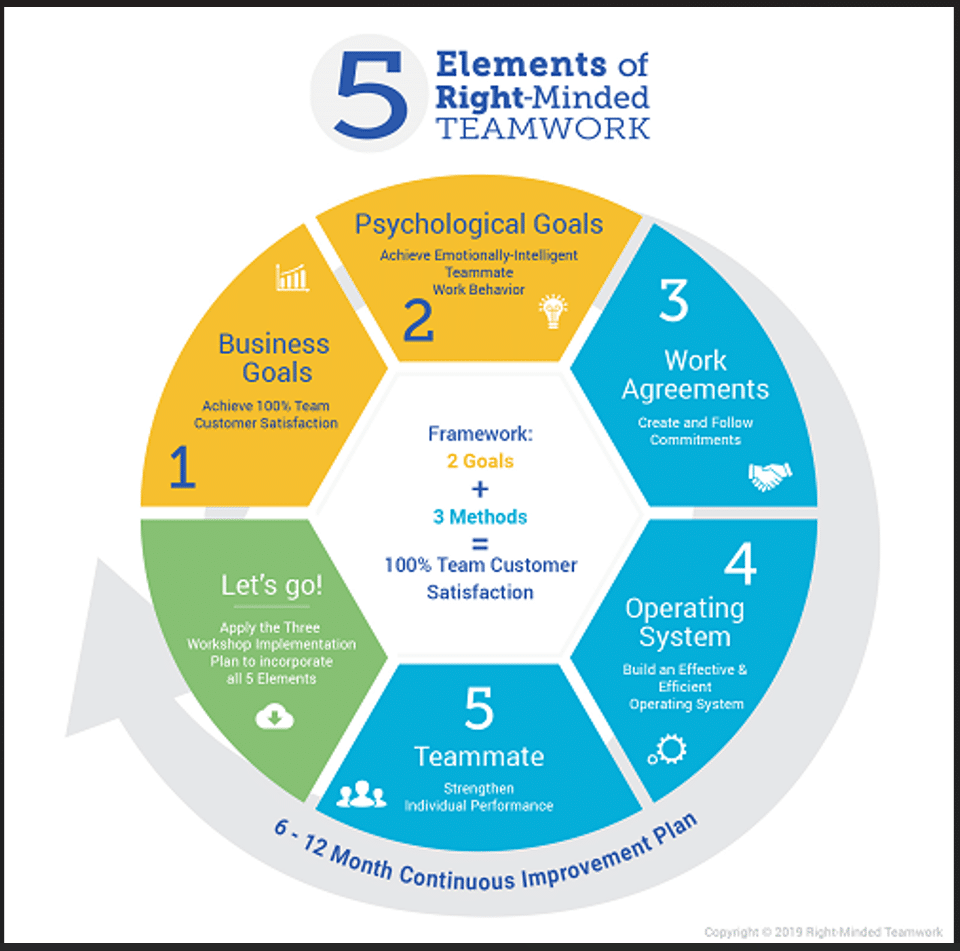
In the RMT 5-Element Framework, our first step is establishing clear business goals, which include several. But the primary goal is customer satisfaction. And you should not guess. In RMT, you involve the customer in defining what success looks like. This segment of RMT advocates two specific tasks:
- Define 100% Satisfaction: Ask your customers what 100% satisfaction means to them and create a plan to achieve it.
- Strategic Alignment: Ensure all team business goals align with your organization’s strategic plan.
7 Steps to Create Your Customer Satisfaction Plan
To improve your team’s performance, RMT advocates creating a Customer Satisfaction Plan. Here is a summary of the 7-step process detailed in my book:
- Agree on the Questions: As a team, agree on specific questions to ask. (e.g., “Where are we NOT meeting your expectations?” or “Is there anything we give you now that you do not need?”)
- Choose Ambassadors: Select two teammates to conduct the interviews.
- Ask Permission: Request the interview and provide the questions in advance so the customer can prepare.
- Conduct & Validate: Conduct the interview and reflect what you heard to ensure alignment. Ask: “If we consistently delivered these things, would you be 100% satisfied?”
- Discuss as a Team: The whole team reviews the results to understand what they must start, stop, or continue doing.
- Finalize the Plan: Teammates agree on the final Customer Satisfaction Plan, modifying roles if necessary to ensure success.
- Commit to Action: All teammates formally commit to doing their part to achieve 100% satisfaction.
Build a Team That Works as One
When teammates clearly understand what satisfies their customer, they no longer have to guess how to behave or, in RMT terms, how to Do No Harm and Work as One®. They can make a conscious choice to follow Work Agreements because they clearly see the direct link between those actional agreements and 100% customer satisfaction.
Effective team building isn’t just for teammates. It is for the team’s customers.
Ready to create your own Customer Satisfaction Plan?
The full, step-by-step process—including the interview scripts, “Big 5” questions, and alignment templates—is detailed in my book, Right-Minded Teamwork in Any Team.
Includes the complete guide plus all downloadable resources to help your team work as one.

May the Oneness be with you. 🙏
Dan Hogan, Certified Master Facilitator
P.S. New here? You can learn more about my 40-year mission to help teams Do No Harm and Work as One® on my About Page.
