

In Right-Minded Teamwork (RMT), we say that your central psychological team goal and aspiration is: Do No Harm and Work as One (Element #2).
But how do you make that a team reality?
It starts with you, the Decision-Maker—that part of every teammate that chooses how to respond, especially when things go wrong. The journey to high performance is born the moment your team collectively decides to stop listening to the Ego’s “Battleground” screeches and instead commits to Reason’s shared, aspirational intention to work as one.
How to Achieve This Goal
To begin this shift, the team leader invites all teammates to a meeting specifically designed to establish this foundation. The invitation is simple:
“In four days, we will meet to discuss and agree on the primary goal for how we function together. Our objective is to decide if we can collectively commit to the Right-Minded Teamwork intention to Do No Harm and Work as One.“
Even with such a positive invitation, the Ego often begins its counter-offensive before the meeting even starts. Two of the Ego-driven, “out of their Right-Mind” teammates might already be preparing their Lower Loop responses.
The Perfectionist’s Perception
Driven by judgment, they worry that a “Do No Harm” goal sounds too soft.
Their internal monologue: “If we don’t focus on finding every mistake and holding people’s feet to the fire, our standards will slip. This ‘Oneness’ idea is just a way to let incompetent people off the hook.”
The Perfectionist’s “intention” is actually self-protection through fault-finding and rigid control.
The Avoider’s Perception
Driven by fear, they see the meeting as a threat to their privacy.
Their internal monologue: “If we agree to ‘Work as One,’ people might start expecting me to speak up or take a stand. I prefer to stay quiet, agree with whatever is said, and hope no one notices me.”
Their “intention” is a false sense of safety through disengagement and the Lower Loop path of victimization.
The Sensible Anchor Intervenes
If the Perfectionist’s rigidity and the Avoider’s silence dominate the meeting, the team will not have a healthy and purposeful dialogue.
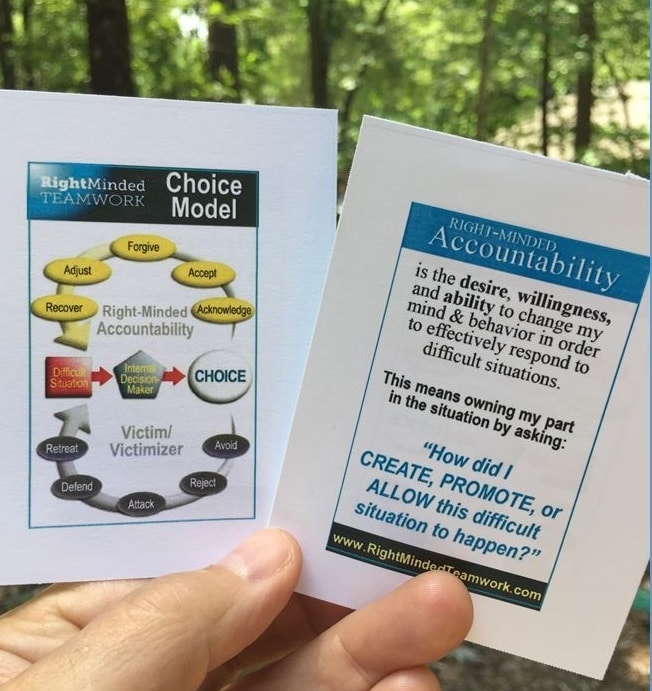
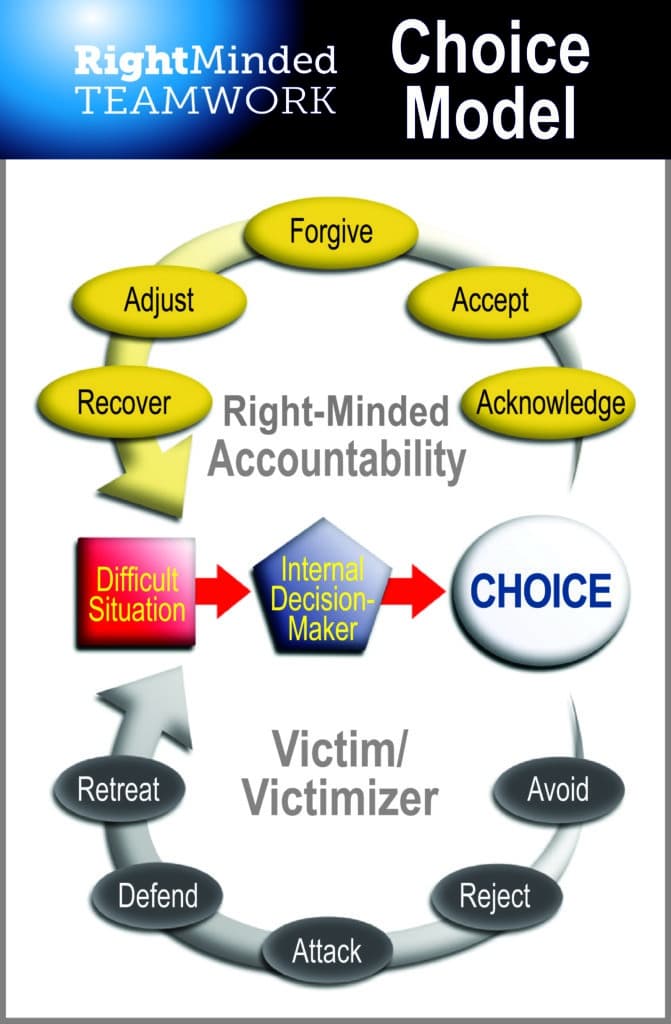
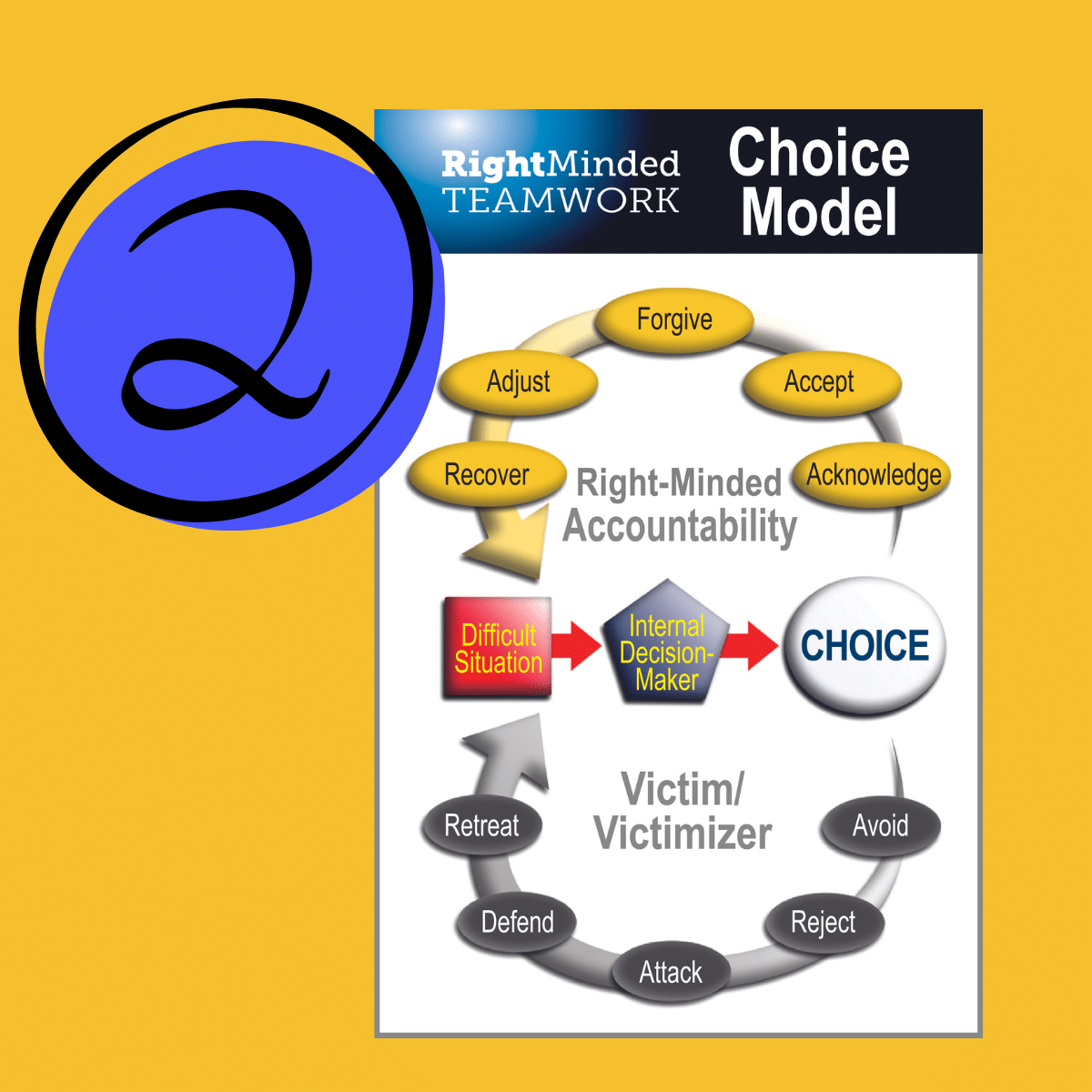
Knowing that, and acting as the team’s Sensible Anchor, the leader decided to use Reason’s Right Choice Model as a visual guide. They placed the model on the wall, gave everyone a Right Choice Card, and addressed every teammate’s Decision-Maker, saying:
“We have a choice in how we work. We can follow the Ego’s path that ensures we point fingers at the past or hide from future challenges, which guarantees we will not work as one. Or, we can choose the Upper Loop. Shall we commit right now to a shared intention of Doing No Harm and Working as One as our psychological foundation?”
By asking for this collective consensus, the leader helps the team:
- Acknowledge any current tensions without the sting of judgment.
- Accept that Lower Loop defensiveness is a waste of team energy.
- Forgive the errors of the past so the team can return to its collective Right Mind and focus on the goal of finding real solutions.
The Result: A Shared Psychological Foundation
Because the team chose to follow the Sensible Anchor, which is in every teammate, by the way, the energy shifted from “protecting myself” to “supporting the team.” The Perfectionist realized that “Right-Minded” doesn’t mean lowering standards—it means correcting mistakes without punishment. The Avoider realized that true safety comes from being part of a unified “We,” not from hiding in the shadows.
By the end of the meeting, the team didn’t just have a slogan; they had an Aspirational Intention. They established their consensus agreement to live their version of Do No Harm and Work as One. This consensus became the “greenhouse” in which their next step—specific Work Agreements (Element #3)—could finally grow into specific behaviors everyone will live by.
The Choice is Yours

When your team faces pressure, remember: You are the Decision-Maker. You can allow the Perfectionist’s judgment or the Avoider’s fear to lead you into the Lower Loop, or you can choose the path of the Anchor. As you consider your choice, remember these two certainties of teamwork:
- It is as sure that those teammates who choose to find fault in how the team is operating will find cynicism, as it is certain that those who choose to find solutions will find satisfaction.
- It is as sure that those teammates who withdraw and avoid team problems will be miserable, as it is certain that those who engage in finding solutions will become content and happy with their team’s performance.
Establishing your team’s psychological goal is about more than words on a page. It is a healthy, functional, and empowering dialogue that moves your teammates toward acting and behaving as one unified team.

Ready to apply the Right Choice Model to your team’s challenge?
The step-by-step facilitation guide is available in:
How to Apply the Right Choice Model: Create a Right-Minded Team That Works as One.
As a retired facilitator, my special function is now to support you. If you are curious about how to lead this dialogue for your team, please reach out. I have seen this shift transform many teams, and it can work for yours, too.

May the Oneness be with you. 🙏
Dan Hogan, Certified Master Facilitator