
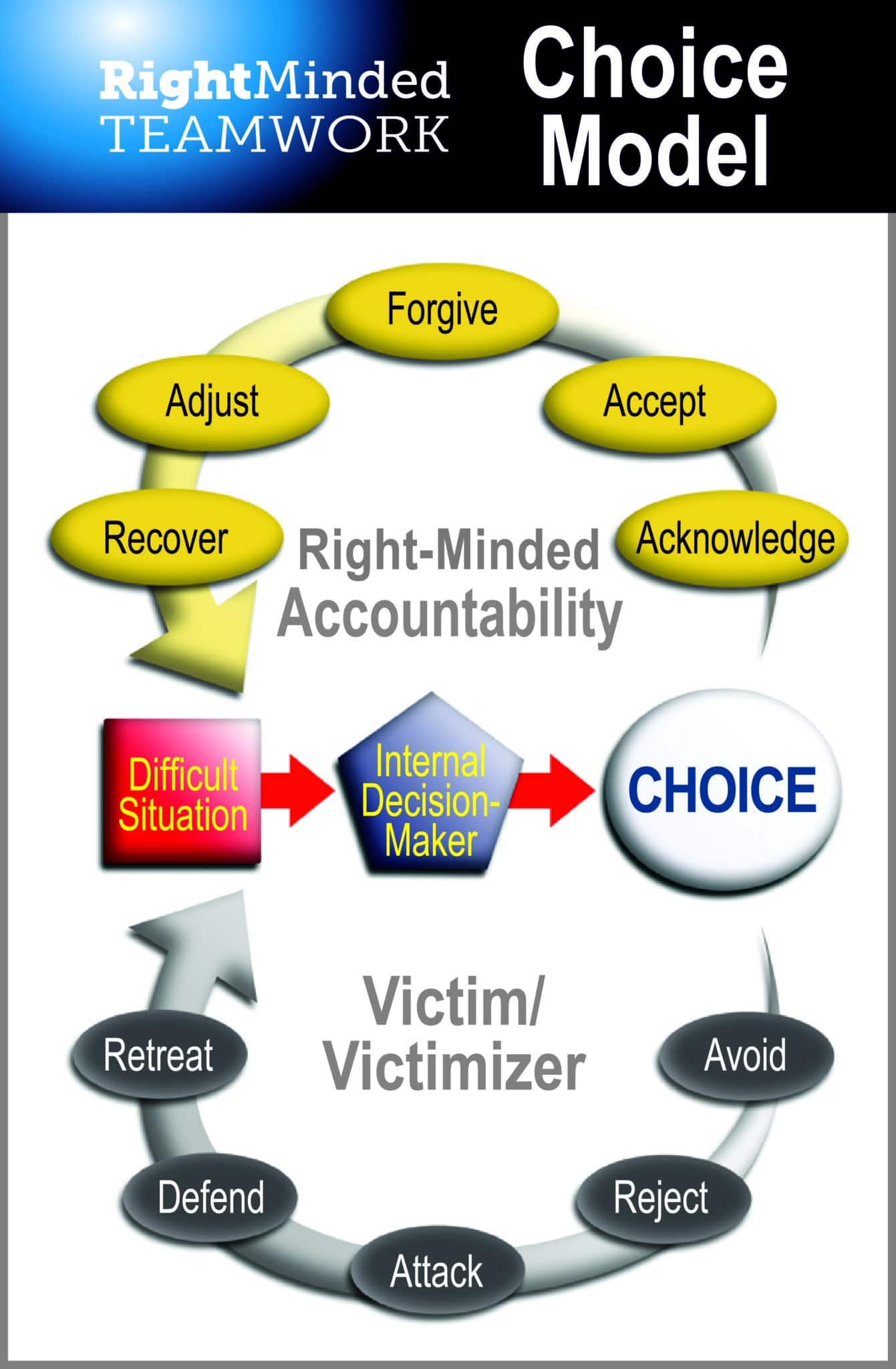
Avoidance Behavior is defined as Wrong-Mindedness and is the first step in the victim or adversary cycle (see lower loop in Right Choice Model).
Though not always explicitly highlighted, Avoidance Behavior is easy to detect in RMT processes. From a Right-Minded Teamwork (RMT) perspective, it is considered adversarial behavior that hinders progress and creates internal team conflict.
RMT teaches teammates to face challenges and resolve issues with compassion rather than sidestepping them with silly team games or useless training exercises.
Identifying avoidance and understanding the harm it causes is the first crucial step, “Acknowledge,” in moving from a wrong-minded place into Right-Mindedness.
The Role in Wrong-Mindedness
Avoidance is the first step in the “lower loop” of the Right Choice Model.
When facing a problem (like a teammate’s poor performance or a critical customer issue), a teammate following Ego will first try to avoid the teammate or the situation, hoping the problem will resolve itself.
If this avoidance continues, the teammate is drawn into the subsequent steps of the wrong-minded cycle:
- Reject: Denying or minimizing the problem’s impact.
- Attack: Blaming other teammates, the leader, or the organization.
- Defend: Rationalizing one’s own inaction or poor performance.
- Retreat: Hiding, becoming unavailable, or demonstrating confusion to escape responsibility.
When teammates are stuck in this wrong-minded cycle, the problem remains unresolved, and the cycle accelerates the next time a similar situation occurs.
Transitioning to Accountability
RMT provides tools and concepts (Right Choice Model & team Work Agreements) for teammates to recognize and quickly shift away from avoidance. When Right-Minded Teammates realize they have unconsciously demonstrated avoidance behavior, they enter a Moment of Reason and use the principles of the upper loop of the Right Choice Model:
- Acknowledge: Admit that a problem exists. The opposite of Avoidance Behavior.
- Accept: Own their part by asking, “How did I create, promote, or allow this difficult situation to happen?”
- Forgive: Let go of the past and the need to blame.
- Adjust: Take action to solve the problem by creating a (new?) Work Agreement.
- Recover: Demonstrating once again that there is no problem a Right-Minded Team cannot resolve.
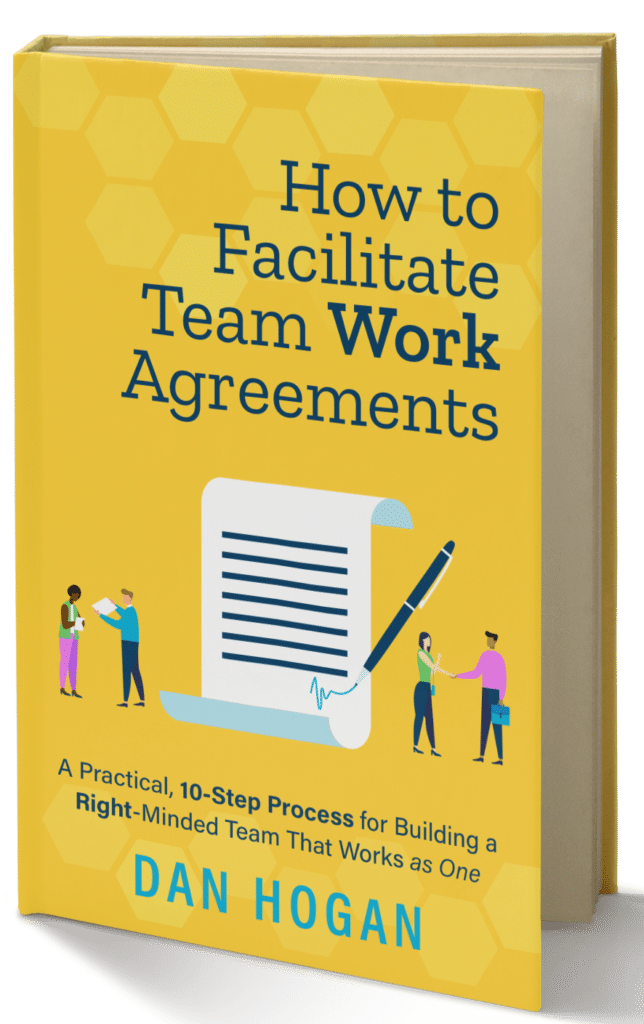
The How to Facilitate Work Agreements book, as well as 7 Mindfulness Training LessonsAchieving Right-Minded Teamwork involves adopting an attitude of mindfulness. These 7 Lessons teach how to do no harm and work as one. More, and the Right Choice Model are excellent tools for teaching the team how to act in a Right-Minded, accountable way.
Learn More: Work Agreements
How to Facilitate Team Work Agreements: A Practical, 10-Step Process for Building a Right-Minded Team That Works as One
Download the ebook package here at Right-Minded Teamwork
Buy this Paperback Book Directly from Us, or at Amazon