
Complete Critical Few Tasks First is the 6th universal principle from the Right-Minded Teamwork’s 9 Right Choices book, advocating for prioritizing high-value, critical tasks to ensure high performance.
The “critical few” are those tasks that have the largest and most direct impact on the team’s success and vision. This concept is the direct solution to the “full-plate syndrome”—a significant barrier to team performance rooted in wrong-minded thinking.

Ego vs. Reason in Task Prioritization
The full-plate syndrome is driven by the team’s collective fear, perpetuated by Ego, which declares, “You will get in trouble if you do not do it all.” This leads teams to punish themselves by attempting the impossible, resulting in drained energy, burnout, and quality issues.
Teammates who choose to believe they do not have a choice become powerless, cynical, and burned out.
Reason, however, reminds us that we always have a choice:
- We can win by doing the critical few tasks.
- We can lose by attempting to do everything.
Holding on to lower-value tasks is not security; it is incarceration.
Successful RMT teams learn how to confidently say “no” to tasks that pull them away from their goals, freeing them to spend time on the right things in the right way.

Identifying the Critical Few
RMT encourages teams to make a case for using their team’s vision to identify the critical few tasks.
This is typically achieved through a roles and responsibilities exercise where all teammates participate. The purpose of this exercise is to eliminate ambiguity and ensure that teammates are focusing their efforts on high-value activities.
Teammates prepare by answering these key questions:

- What are the two to three key deliverables you produce for the team? (Helps prioritize high/low-value tasks.)
- What resources or support do you need that you are NOT currently receiving? (Identifies responsibility gaps and leads to new Work Agreements.)
- What are you getting that you DON’T need? (Helps the team decide if some low-value tasks can be eliminated.)
The exercise mitigates the excuse, “Don’t blame me. It’s not my job!” The outcome is a clear understanding and the creation of Work Agreements that channel team energy and resources toward activities that truly matter.
Action
Download for free, RMT’s Defining Teammate Roles and Responsibilities Exercise Using These Four Questions.
The “critical few” concept is discussed in the book Right-Minded Teamwork: 9 Right Choices for Building a Team That Works as One.
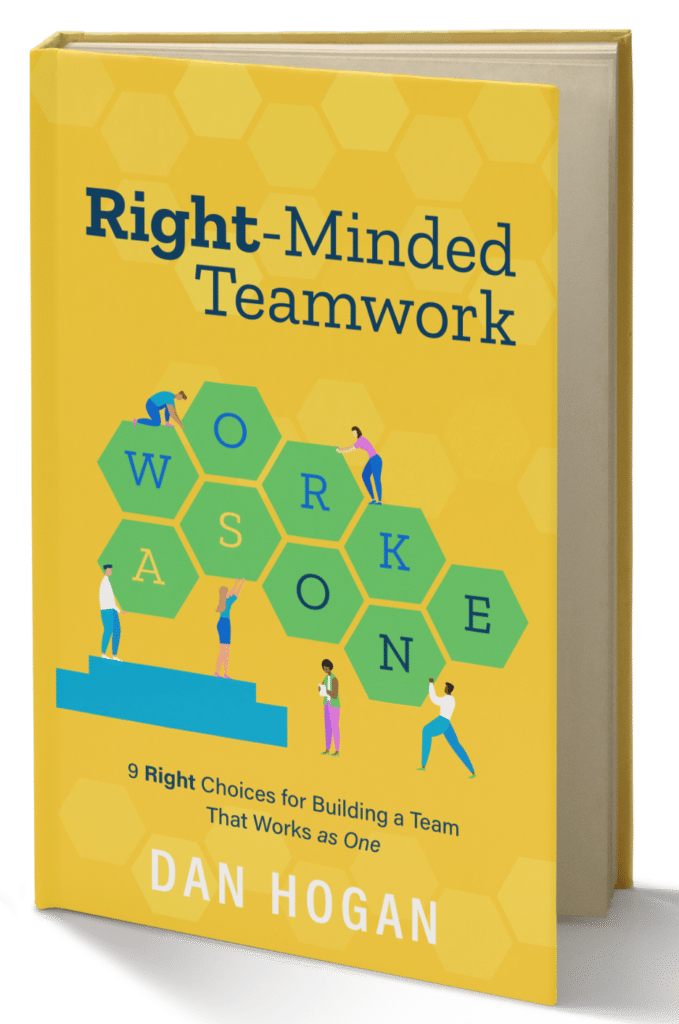
Download the ebook package here at Right-Minded Teamwork
Buy this Paperback Book Directly from Us, or at Amazon